
Industrial applications for process columns and terminal transfer systems
Application guidance for EPC contractors, process engineers, refinery maintenance teams and terminal operators evaluating Baretti Mass Transfer internals, fractionation trays, tower packing, Loading/Unloading Lines, severe-service materials and site-service support.
For EPC & refinery engineers
- Column internals, trays and tower packing
- Revamp, replacement and shutdown-driven scope
- Materials and severe-service compatibility review
- Loading/unloading interfaces for refinery terminals
Industrial applications for process columns, terminals and severe-service equipment.

Refining
High-performance column internals engineered for crude oil distillation and severe refinery processes.
Refining application details
Loading and Unloading Applications
Specialized equipment designed for safe, high-efficiency fluid transfer during terminal operations.
Loading and unloading details
Extraction
Advanced upstream solutions designed for crude oil extraction and demanding offshore operations.
Extraction application details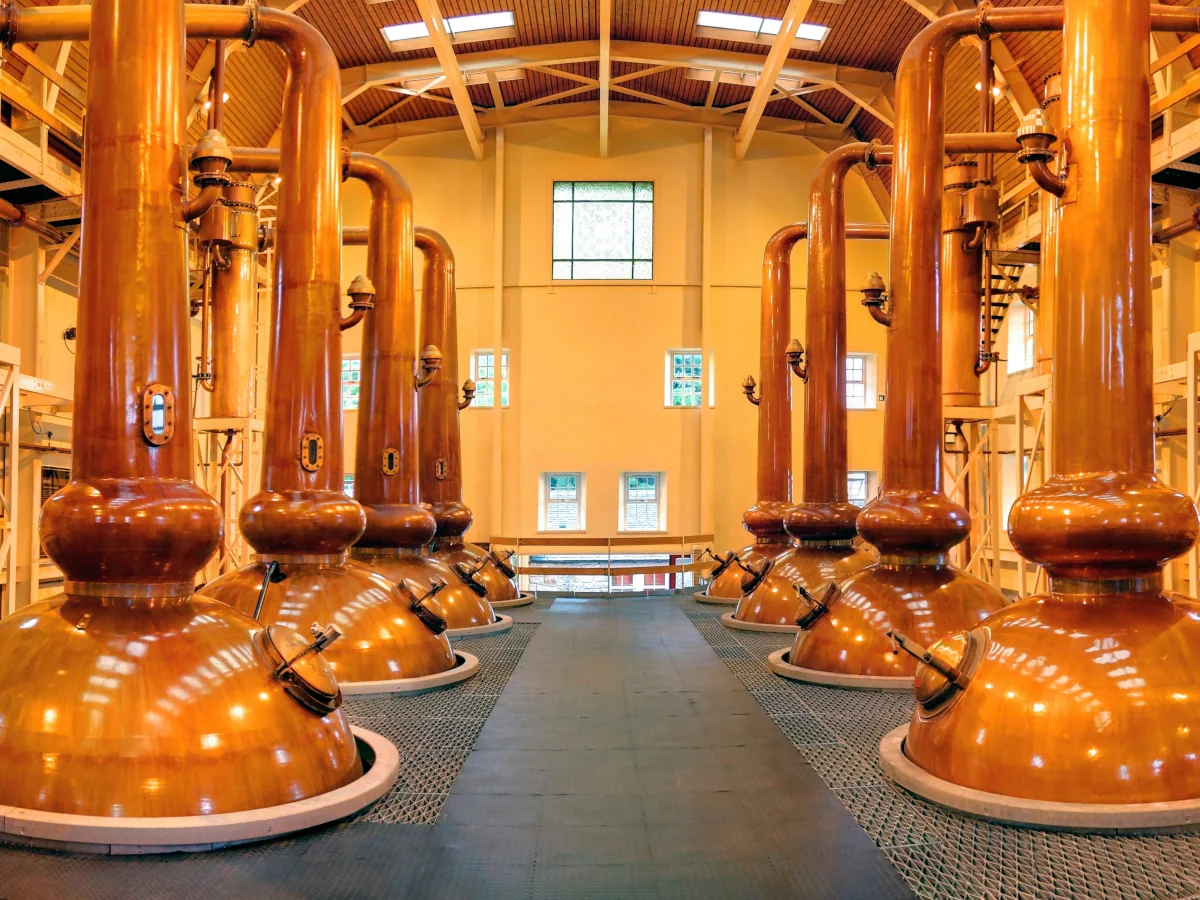
Food and Beverages
Hygienic and certified process solutions tailored to meet strict food-grade compliance and standards.
Food and beverage details
Chemicals and Petrochemicals
Robust process internals designed for high-stability separation across complex chemical operations.
Chemical application details
Materials & reliability
Material selection, corrosion exposure and mechanical details reviewed before supply.
Severe service details
Tank farm transfer
Road, rail and marine transfer interfaces connected to refinery logistics and storage areas.
Tank farm transfer details
From application duty to a supply-ready technical package.
Each application is reviewed from two connected viewpoints: process performance and mechanical execution. For columns this means vapor and liquid loads, pressure drop, operating envelope, fouling tendency, internals layout, manway access and material compatibility. For terminals it means fluid service, operating range, transfer sequence, access ergonomics, safety devices, automation and maintainability.
Refining applications: crude, vacuum and refinery fractionation columns.
Downstream applications normally require a combined evaluation of separation efficiency, hydraulic capacity, pressure drop, fouling risk, material resistance and shutdown constraints. Baretti supports refinery column scopes where trays, packing and complementary internals must be selected as an integrated system rather than as isolated components.
Typical services include atmospheric crude towers, fuel and lube vacuum towers, FCC main fractionators, coker fractionators, stabilizers, amine absorption towers, regenerators, light-ends distillation towers, quench towers and sour-water-stripper related applications.
- Tray scope: valve trays, sieve trays, bubble cap trays, baffle trays, cartridge trays, liquid/liquid extraction trays and high-performance tray configurations.
- Revamp focus: capacity increase, lower pressure drop, higher efficiency, better active-area use, reduced dead zones and improved liquid flow distribution.
- Associated internals: transition trays, collector trays, draw-off pans, feed pipes, flashing feed devices, quick-opening manways and installation hardware.
Loading and unloading applications for terminals and transfer stations.
Midstream and terminal operations require transfer equipment that is safe, repeatable, maintainable and compatible with the operating philosophy of the site. Baretti evaluates marine, road and rail interfaces around fluid characteristics, connection geometry, operating envelope, emergency philosophy, access requirements and lifecycle maintenance.
Marine loading arms are designed for ship-to-shore and shore-to-ship transfer of hydrocarbons, LNG and chemicals. Road and rail stations are routed around top or bottom loading concepts, operator ergonomics, couplers, platforms, control sequences and terminal safety logic.
- Marine interfaces: loading arms, berth geometry, manifold reach, balancing philosophy, quick coupling and emergency-release requirements.
- Road and rail systems: loading stations, tank-truck or rail-car access, transfer connections, product handling and operating sequence.
- Auxiliary equipment: swivel joints, pneumatic/hydraulic systems, mechanical items, position monitoring, PLC panels and documentation packages.
Extraction and offshore-oriented industrial support.
Upstream projects and offshore operations require robust mechanical design, reliable sealing philosophy, controlled material selection and clear installation planning. Baretti can support application reviews where crude oil extraction, offshore logistics, fluid-transfer equipment or harsh operating conditions require an industrial package rather than a catalogue selection.
The focus is on equipment compatibility with the site layout, pressure and temperature range, fluid service, corrosion exposure, access limitations and maintenance strategy. For offshore-oriented operations, installation speed, lifting constraints and safe operation during connection or disconnection become part of the technical evaluation.
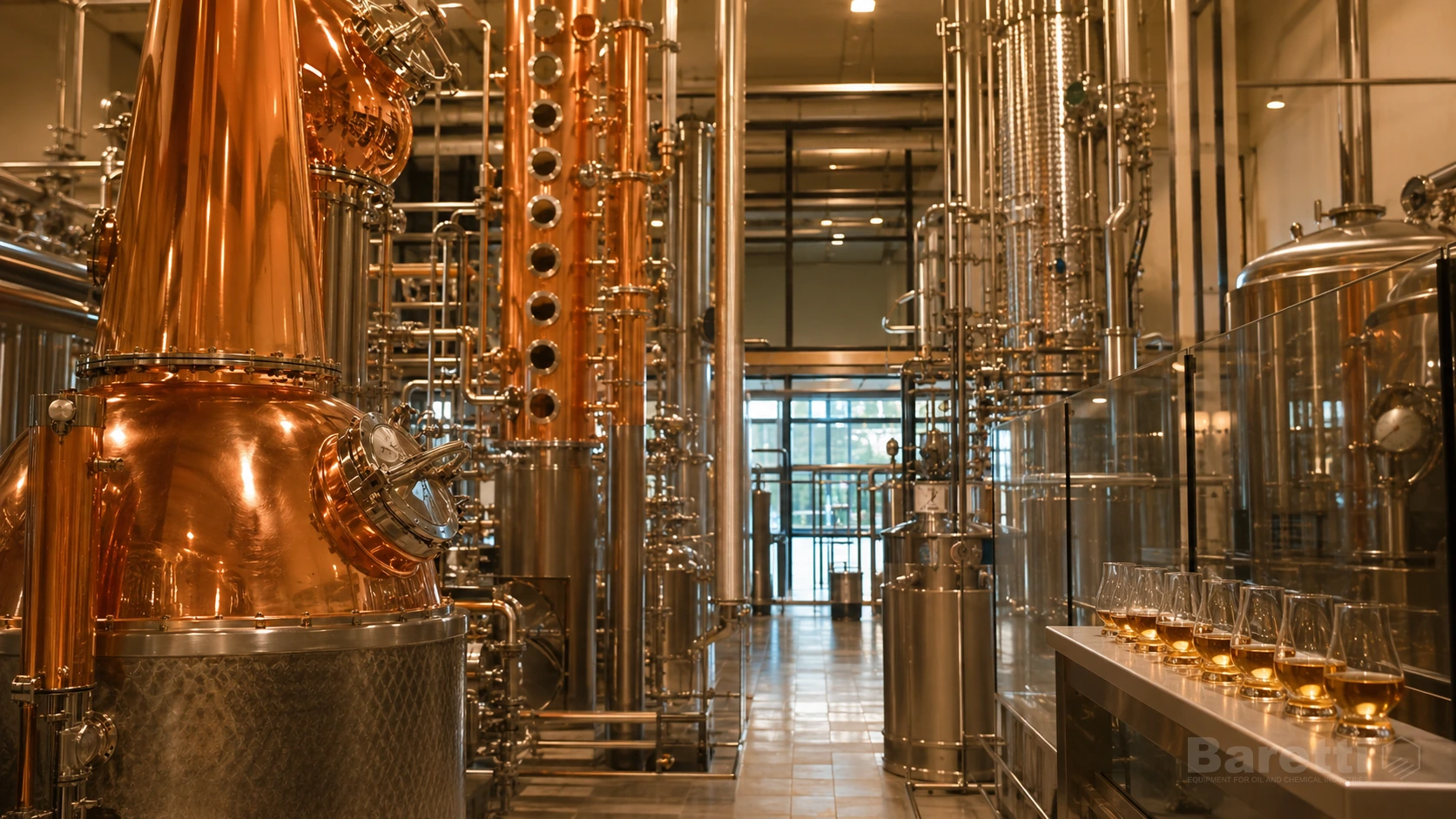
Food and beverage process applications requiring clean execution and traceability.
Food and beverage applications require controlled material selection, cleanability, documentation discipline and manufacturing consistency. Where separation, stripping, deodorizing or process-contacting duties are present, Baretti can route the request through the same engineering logic used for industrial process columns while respecting hygiene, material and certification requirements specified by the customer.
Typical evaluation points include product contact surfaces, selected stainless steel grades, clean access, mechanical retention, distribution quality and the documentation package needed for the useru2019s quality system.
Chemical and petrochemical separation applications.
Chemical and petrochemical plants often combine difficult separation duties, variable loads, corrosion exposure, fouling tendency and strict documentation needs. Baretti supports internals and transfer-equipment selection for absorption, stripping, fractionation, quench, regeneration and specialty chemical processes where reliability and stable operating performance are critical.
The application review considers vapor/liquid distribution, pressure drop, available column height, required efficiency, material compatibility, access through manways and maintainability during turnaround. For liquid-transfer areas, the same project can include terminal interfaces, controls and auxiliary systems.
- Column applications: absorbers, regenerators, strippers, scrubbers, quench towers, LAB alkylation, fibers and petrochemical fractionation.
- Equipment route: structured packing, random packing, liquid distributors, vapor distributors, trays, collectors, demisters and hardware.
- Engineering objective: stable separation, lower pressure drop, improved wetting, reduced maldistribution and mechanical reliability.
Materials and reliability for fouling, coking, corrosion and demanding services.
Severe-service applications require early alignment between process duty, mechanical construction, material class and installation strategy. Baretti reviews corrosion, erosion, coking, polymerization, fouling, flooding risk, internals levelness, bolting, hardware and access constraints before confirming the most reliable equipment route.
For trays and packing, the decision is not limited to nominal capacity. Fouling resistance, anti-clogging features, liquid distribution, pressure-drop limits, support design and future inspection access can determine whether a revamp or replacement will operate reliably over time.
- Severe-service checks: material grade, thickness, corrosion allowance, fouling tendency, coking risk, liquid maldistribution, flooding history and hardware condition.
- Possible solutions: anti-clogging tray technologies, robust packing internals, high-performance trays, grid packing, demisters and reinforced hardware.
- Inspection support: mechanical integrity, corrosion/erosion observation, internals levelness, pressure/temperature profile review and corrective recommendations.
Tank farm transfer interfaces for refinery logistics and storage areas.
Tank farm transfer connects process units, storage areas, truck loading, rail loading and marine jetty operations. The application is normally multidisciplinary: mechanical connection, fluid compatibility, access platforms, transfer sequence, safety devices, emergency philosophy, controls and maintenance planning must be reviewed together.
- Layout inputs: tank farm arrangement, berth or loading-bay geometry, truck/rail access, piping interfaces and operating envelope.
- Safety inputs: emergency release, quick connection, alarms, grounding or interlock philosophy and operating procedures.
- Lifecycle inputs: spare parts, inspection access, maintenance intervals, documentation, test records and shutdown availability.
Direct product families normally specified in industrial application packages.
Start from the equipment families most frequently requested in refinery revamps, petrochemical columns, terminal projects and severe-service replacement scopes.
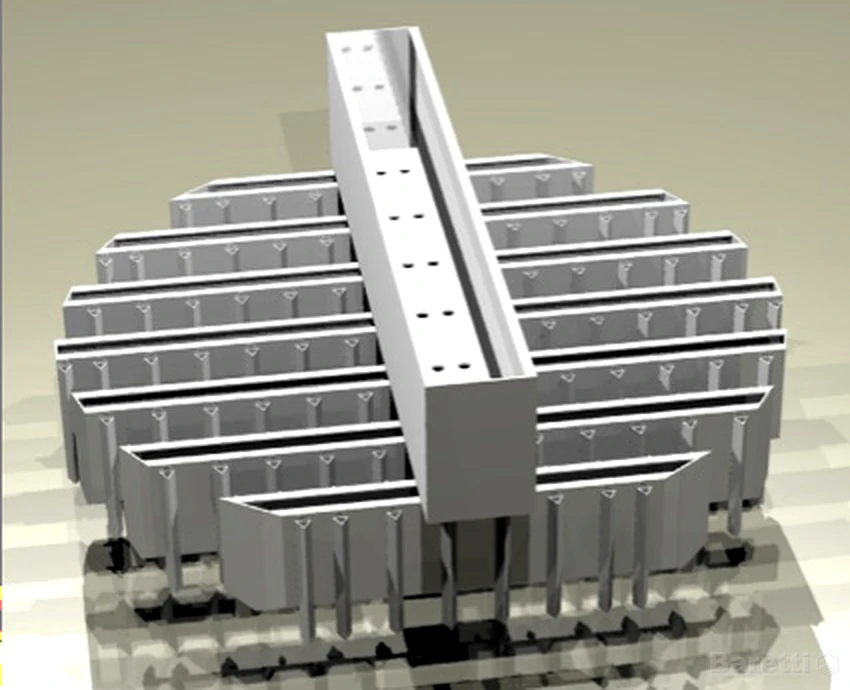
Column Internals
Distributors, collectors, demisters, support internals, inlet devices and mechanical accessories for process columns.
Column Internals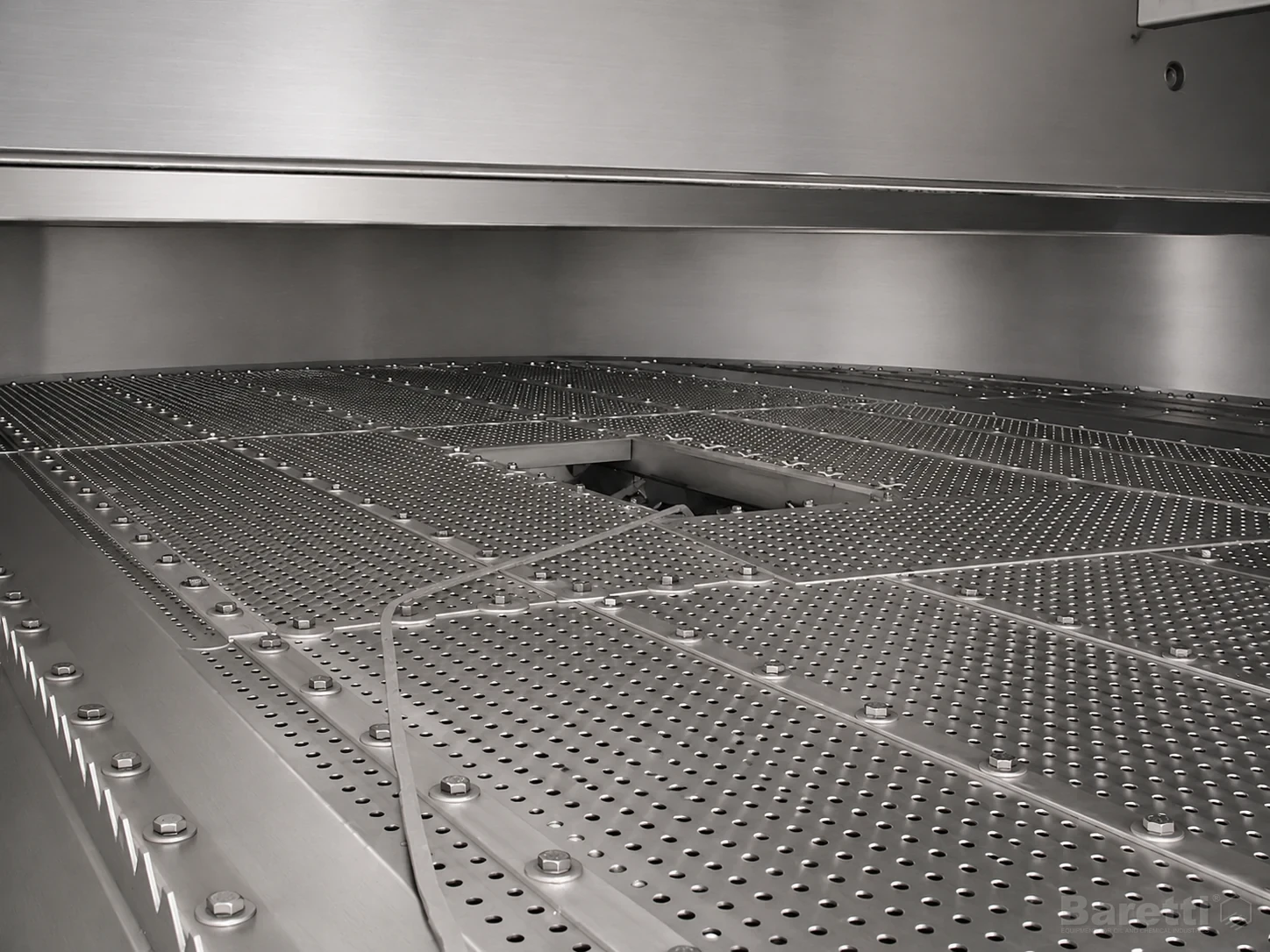
Fractionation Trays
Valve, sieve, bubble cap, baffle, cartridge and high-performance trays for separation duties and revamps.
Fractionation Trays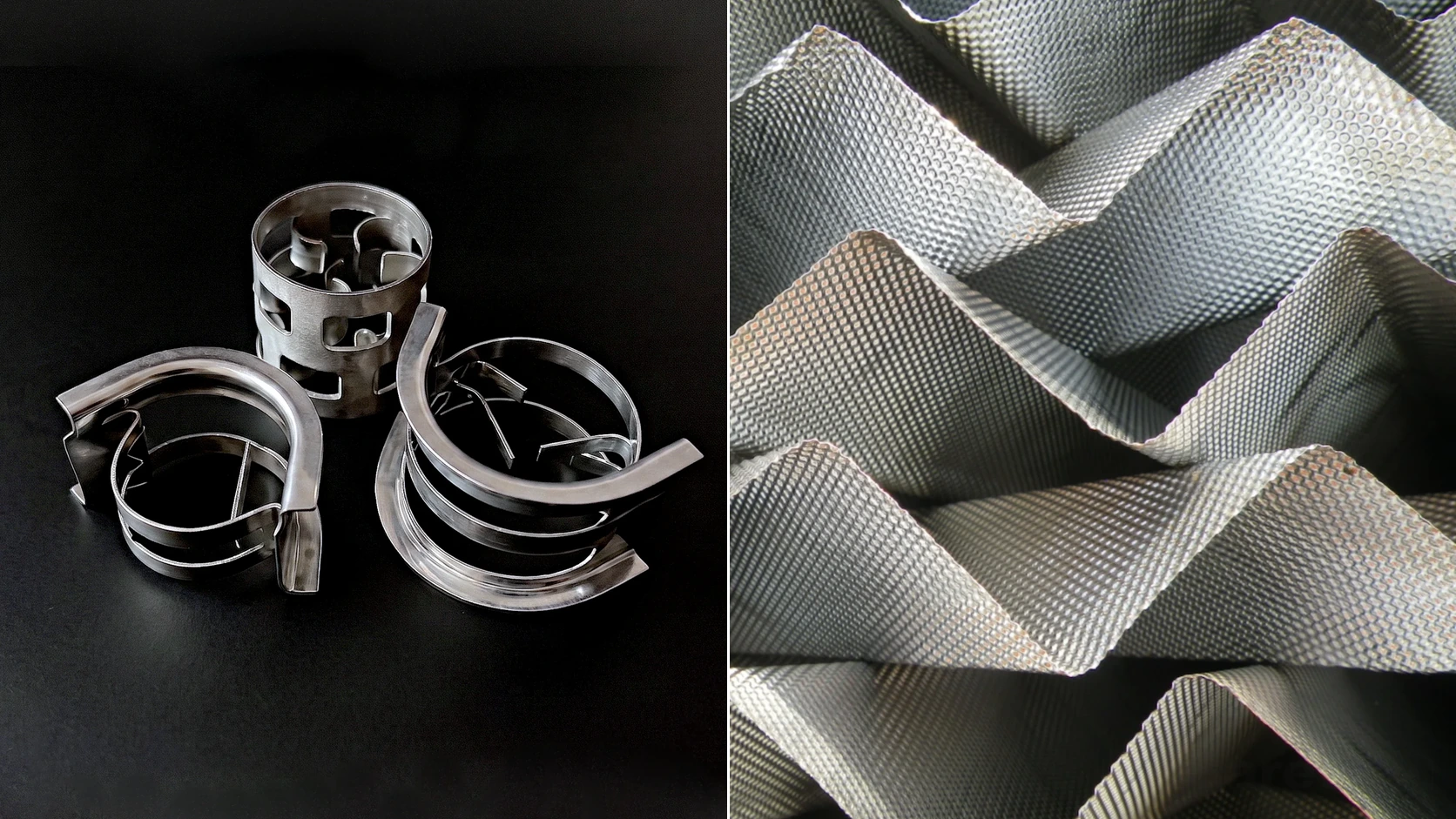
Tower Packing
Random and structured packing selected around efficiency, pressure drop, wetting, fouling tendency and distribution quality.
Tower PackingTransfer Interfaces
Marine, road and rail loading/unloading systems connected to terminal logistics, tank farms and storage areas.
Loading/UnloadingInformation required to prepare a reliable technical proposal.
Process-column data
Terminal-transfer data
- Fluid handled and transfer direction
- Road, rail, marine or tank farm interface
- Connection sizes, pressure class and material requirement
- Automation, PMS, ERS/QCDC and auxiliary needs
Execution and documentation
- Applicable specifications and project standards
- Required certificates, inspection and test plans
- Shutdown dates, site constraints and lifting/access limits
- Spare-parts strategy and maintenance expectations
- Drawing format, vendor documentation and reporting needs
Questions EPC engineers and plant operators usually clarify before RFQ.
These answer-ready notes help identify the correct product route and the information needed for a technical-commercial evaluation.